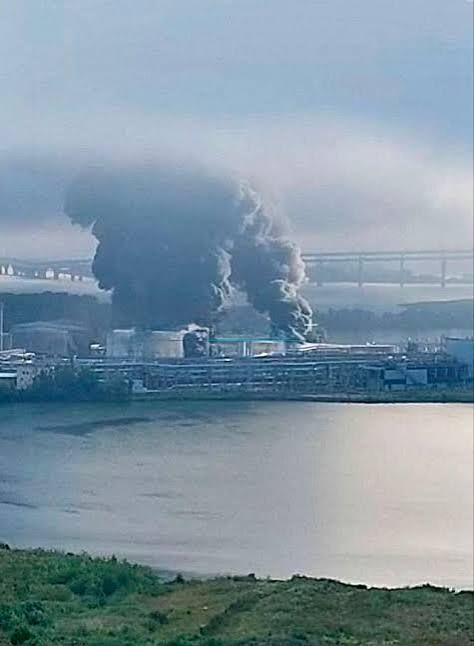
Oil Climbs as U.S.–Iran Fighting Returns to the Strait of Hormuz


Renewed attacks threaten the shipping recovery that had started to calm crude markets—and the consequences extend well beyond energy stocks.
August 30, 2026 | U.S. Evening Market Update
Just as oil traders were beginning to believe more crude could move safely through the Strait of Hormuz, fighting flared again Sunday.
U.S. forces struck two Iranian rocket launchers on Larak Island. U.S. Central Command said Revolutionary Guard forces had been preparing rockets carrying sea mines and described the strike as “limited, precise action” against an “imminent threat.”
Iranian state television later reported that Iran fired missiles at U.S. sites in Jordan. Jordan’s military said it intercepted eight missiles that entered its airspace.
Oil reacted immediately as Monday trading opened in Asia. As of 8:40 p.m. ET Sunday, Brent crude was up 1.23% at $89.18 a barrel, while U.S. West Texas Intermediate gained 1.10% to $84.32.
Visible commodity-vessel traffic through Hormuz had fallen to five ships a day over the weekend. Reuters cautioned that the real number could be higher because some vessels disable their tracking systems to reduce the risk of attack.
“Looks like we are in another escalation phase. How long that lasts is impossible to determine. Could be days, could be weeks,” IG market analyst Tony Sycamore said.
Why the History Matters
The war began late February, but its effect on the oil market is already historic. U.S. Energy Information Administration data show oil flows through Hormuz falling from 21.6 million barrels a day during the fourth quarter of 2025 to only 4.9 million during the second quarter of 2026.
Markets had recently been betting that shipping through the strait would gradually recover. Sunday’s fighting puts that assumption back in doubt.
There is also a useful warning from 2019. After attacks on Saudi Arabia’s Abqaiq and Khurais facilities, Brent recorded a rare 12.7% daily increase. Yet Brent fell from an opening price of $71.57 to $65.09 within roughly nine hours as traders received better information about the disruption.
The lesson is simple: frightening headlines create the first move, but the length and severity of the physical supply loss determine whether higher prices last.
What It Means for Your Money
If Brent establishes itself above $90 and shipping remains restricted, broad energy exposure such as the Energy Select Sector SPDR Fund (XLE)—along with producers including Exxon Mobil and Chevron—would generally receive support.
Refiners such as Valero and Marathon Petroleum could also benefit if scarce diesel and gasoline rise faster than their crude-oil costs. Investors should watch refining margins rather than assuming every oil company automatically benefits from higher crude prices.
The other side of that trade is painful. Airlines, trucking companies, manufacturers and consumers all absorb higher fuel costs. More expensive oil can also keep inflation elevated and interest rates higher.
Markets currently assign a 57% probability to a September Federal Reserve rate increase following Chair Kevin Warsh’s inflation comments. Another sustained oil surge would add to that inflation pressure, potentially hurting bonds, rate-sensitive small companies and high-valuation growth stocks.
Sanctions create a second layer of risk even if the shooting cools. Treasury Secretary Scott Bessent told Reuters that new measures targeting Iran’s financial connections could arrive weekly.
“You’re going to see a lot more of these every week,” Bessent said.
OilOutlook’s 30–90-Day View
Our base case, at 55%, is Brent trading between $82 and $95 while limited shipping continues through Hormuz.
Our bullish case, at 30%, is renewed mining, tanker attacks or broader military action driving Brent above $100.
Our bearish case, at 15%, is a verifiable shipping agreement restoring traffic and pulling Brent toward $72–$80.
The EIA’s August forecast—completed before Sunday’s strike—projects Brent averaging approximately $78 during the fourth quarter if shipping traffic and Gulf production recover.
Three Investor Takeaways
- Watch energy, but do not chase a single headline-driven opening spike.
- Protect fuel-sensitive holdings if Brent establishes itself above $90.
- Wait for confirmation: A WTI close above $85.90 combined with persistently weak Hormuz traffic would strengthen the bullish case. Recovering vessel traffic and Brent falling below $82 would weaken it.
Sources
- Reuters — Oil rises after U.S. attack on Larak Island
- Associated Press — U.S. strikes Iranian launchers near Hormuz
- Reuters — U.S. and Iran exchange fire; additional sanctions expected
- Reuters — Oil, inflation and the global-market reaction
- U.S. EIA — August 2026 Global Energy Security Data
- U.S. EIA — August Short-Term Energy Outlook
- U.S. EIA — Historical market reaction to oil-supply disruptions